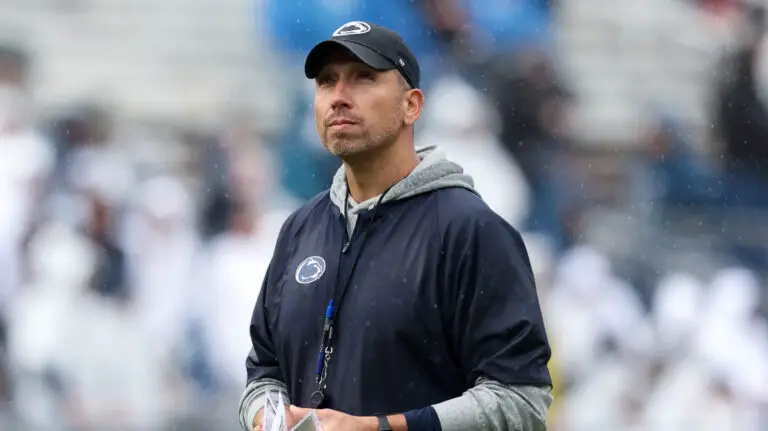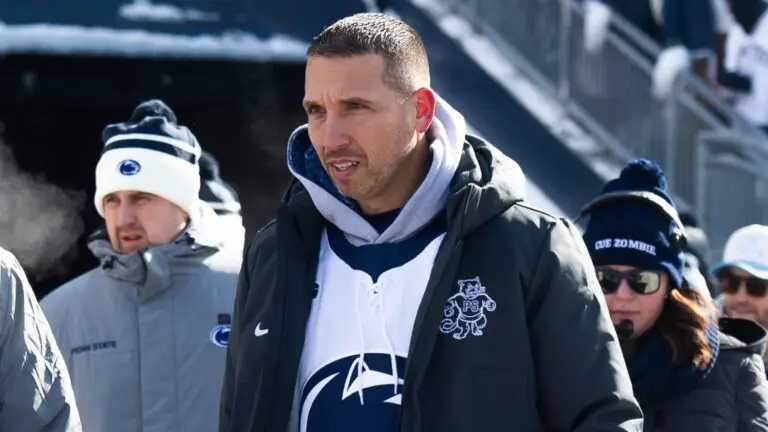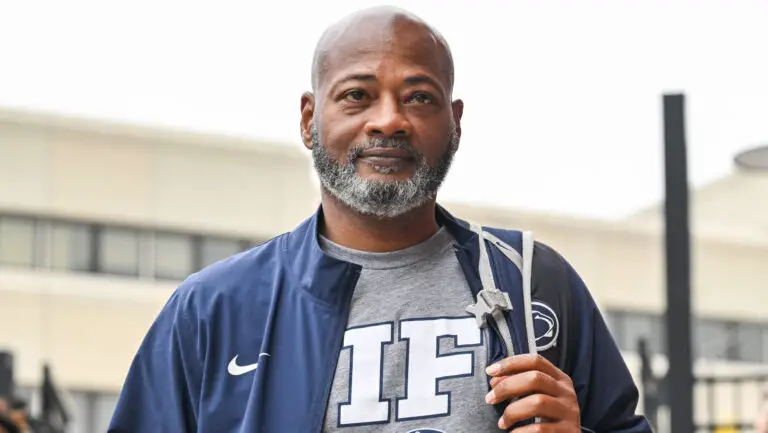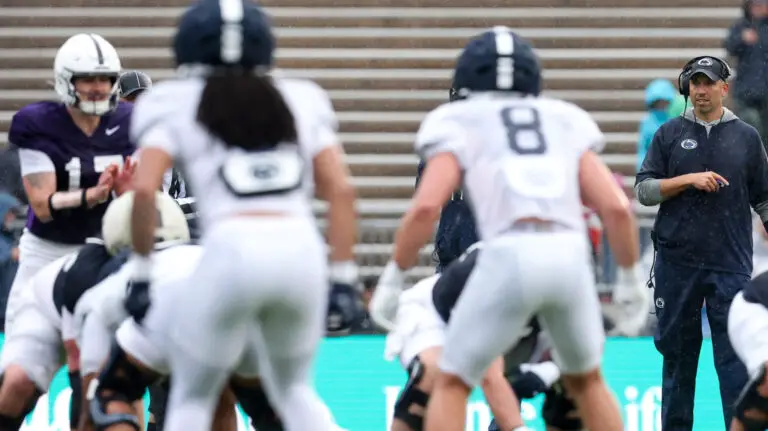
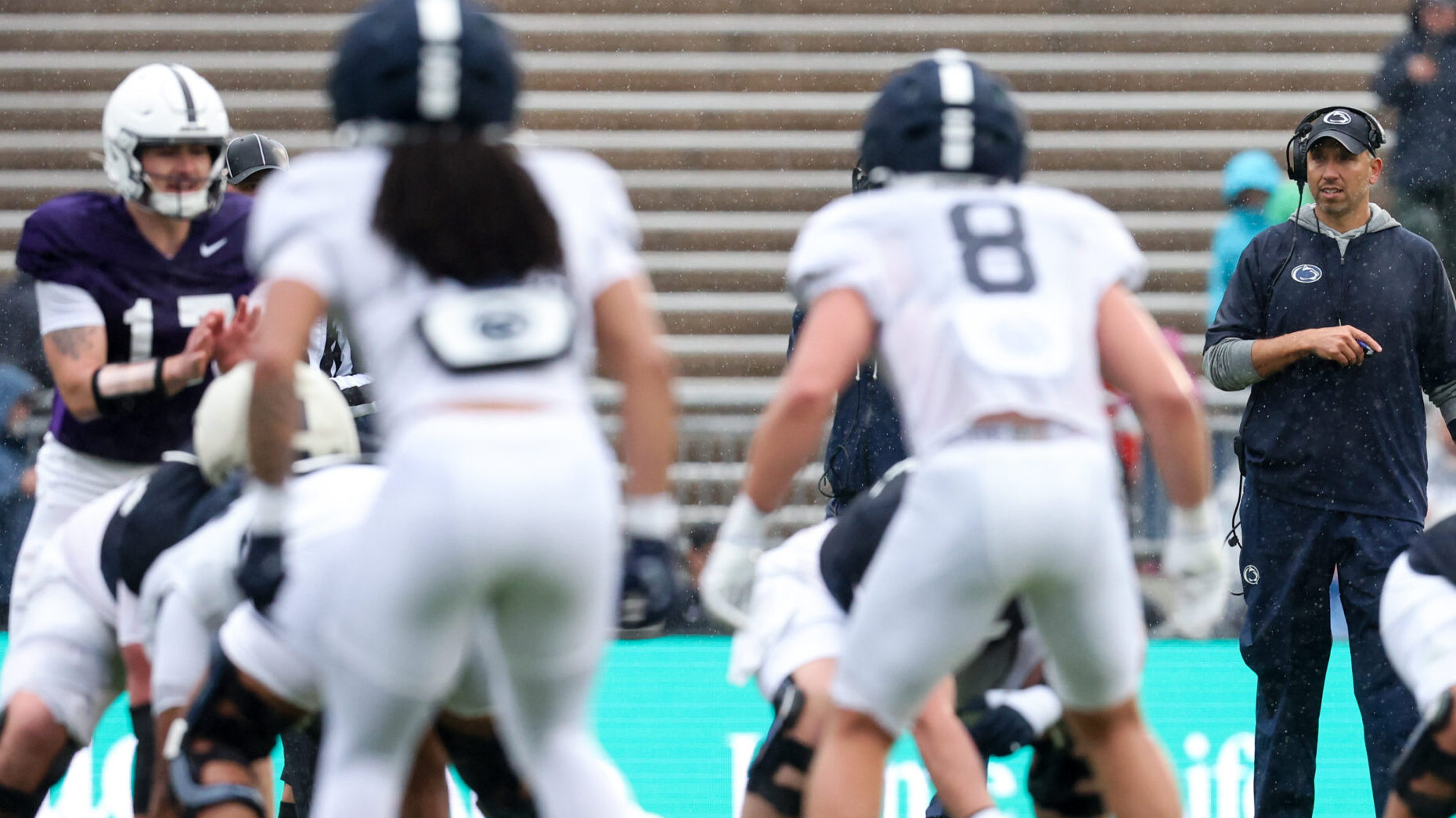
Head coach Matt Campbell set the foundation for Penn State's offense during his first spring in Happy Valley. (Mandatory Credit: Matthew O'Haren-Imagn Images)
Penn State Football finished 7-6 last year, after opening the season as a program expecting to contend for a National Championship. That, obviously, did not happen.
Head coach James Franklin was fired during the season, replaced by Terry Smith, who did a solid job, while becoming a favorite inside the locker room and in the stands at Beaver Stadium.
After Penn State’s season was over, the Nittany Lions went to work and after an exhaustive and exhausting coaching search, hired former Iowa State head coach Matt Campbell.
How Matt Campbell can rebuild Penn State Football
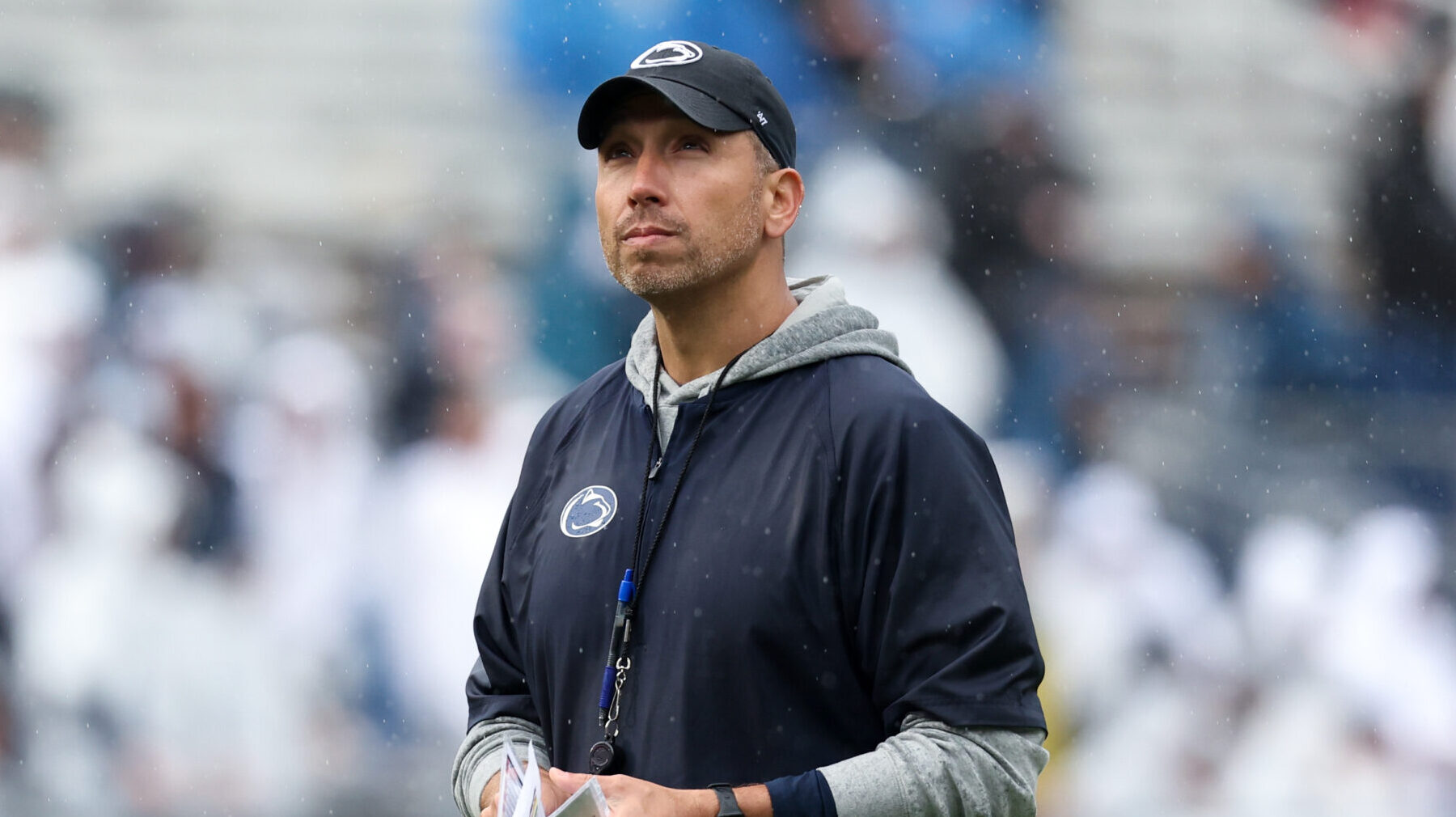
At Iowa State, Campbell went 72-55 in ten years. Before his time in Aimes, Campbell coached at Toledo and went 35-15 in five years. In 15 total years as head coach, Campbell compiled a 107-70 record.
Now, Campbell is charged with turning the Nittany Lions’ program around and establishing a winning culture in year one.
Here’s a look at three ways Campbell can do precisely that.
Physicality in the Trenches: Competing with the Big Ten Elite
Penn State already recruits at a high level.
Still, to consistently beat teams like the Ohio State Buckeyes and the Michigan Wolverines, Campbell would need to make physical dominance the program’s identity.
At Iowa State, his teams were known for toughness in the trenches.
Penn State will need to build a more punishing offensive line and create a relentless, gap-sound defense.
Also, winning late in games would be key. Penn State has to be able to wear teams down.
Change the Nittany Lions’ Big-Game Narrative
The biggest hurdle for Penn State has been getting over the hump in marquee matchups.
Campbell’s culture would focus heavily on eliminating mental mistakes in those moments.
This means doing better on third downs, in the red zone, and in two-minute drills. Last season’s overtime loss to Oregon, ending on a Drew Allar interception, became a hallmark of Franklin-coached teams, and that has to change.
Fewer penalties and turnovers in high-pressure spots will be a critical benchmark. Practicing pressure scenarios year-round.
Campbell will need to close the gap between “good program” and “elite program” by making execution automatic when it matters most.
Shop The Newest Penn State Gear at Fanatics
Rebuild Player-Led Leadership
One of Campbell’s strengths is empowering players to own the culture.
At Penn State, that could unlock another level of accountability.
Ideally, Campbell would likely establish a strong leadership council, put veteran players in charge of enforcing standards, and reward toughness, discipline, and effort over star status.
When leadership comes from within, culture becomes sustainable … and not dependent on the coaching staff alone.
Ultimately, Campbell’s impact on Penn State Football won’t be about an overhaul, but about redefining the performance in the biggest moments.
By instilling a tougher identity, demanding precision in the biggest moments in the games, and empowering the players to lead, Campbell could elevate a solid program into a championship-contending one.
EXCLUSIVE: Meet The ‘Under the Radar’ QB Who Could Define Penn State’s 2027 Class
Loved this story? Get all our Penn State football coverage and insider updates first. Join our FREE newsletter — your front-row seat to the Lions.

Author

About the Author